Diocletian's Palace
One of the world's most remarkable Roman structures still serving as the heart of a modern city.

Split · Croatia
Ancient City by the Sea
The Simonton AdventuresFrom Our Journey
Split welcomed us from across its brilliant blue harbor, then drew us into a city where Roman columns, medieval stonework, family homes, cafés, and narrow passages all shared the same ancient walls. Diocletian's Palace was not a monument separated from daily life—it was the living heart of it.
The journey
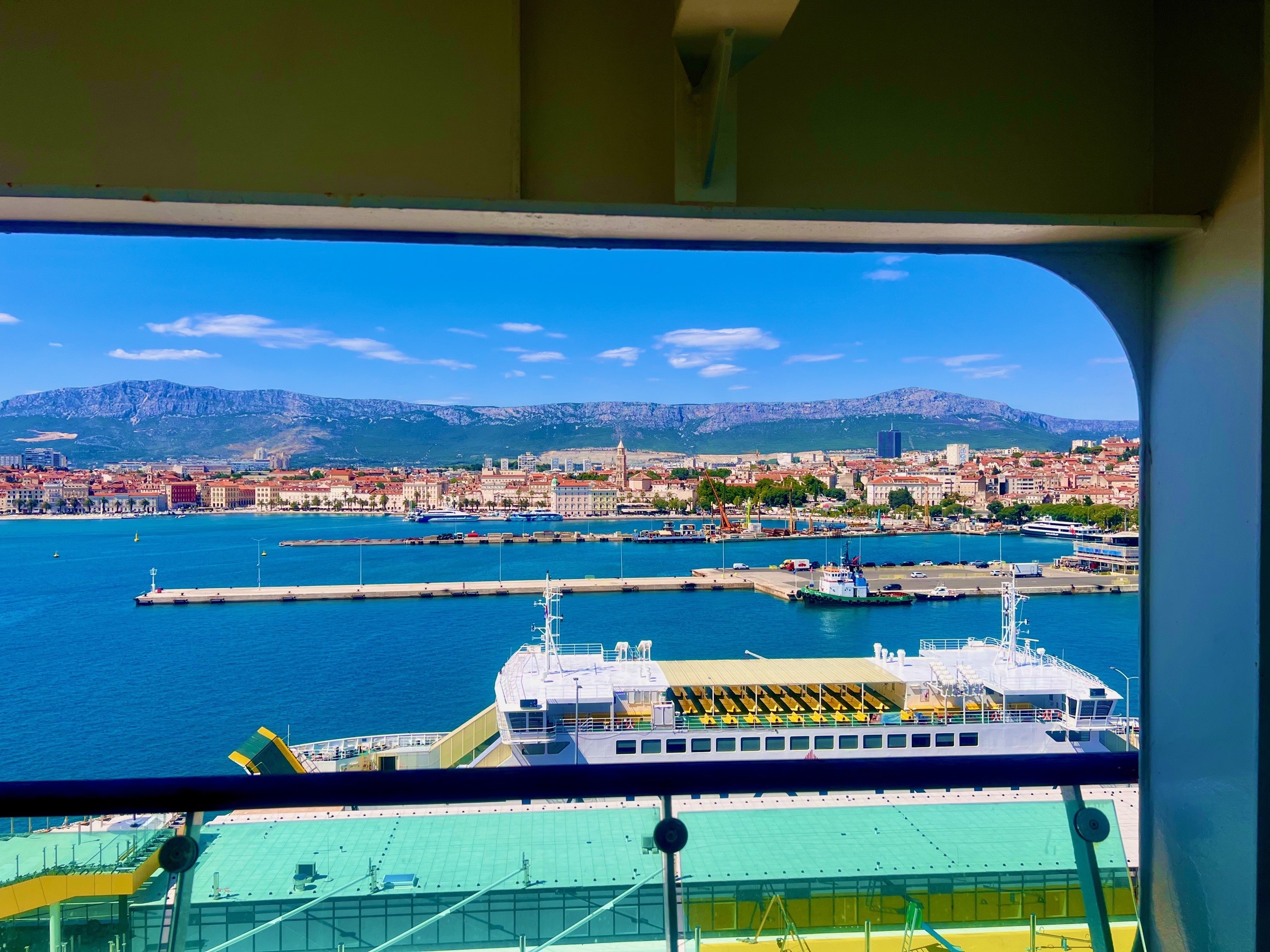
Split first appeared across a sweep of intensely blue water, its waterfront gathered beneath a long ridge of pale mountains. From the harbor, the city's layers were already visible: working docks in the foreground, the palm-lined Riva along the shore, and the bell tower rising above terracotta roofs.
Once ashore, we paused beside the promenade before entering the old city. The relaxed cafés and bright Adriatic light made the Riva feel like Split's front porch—a place where travelers arrived and local life unfolded at an unhurried pace.

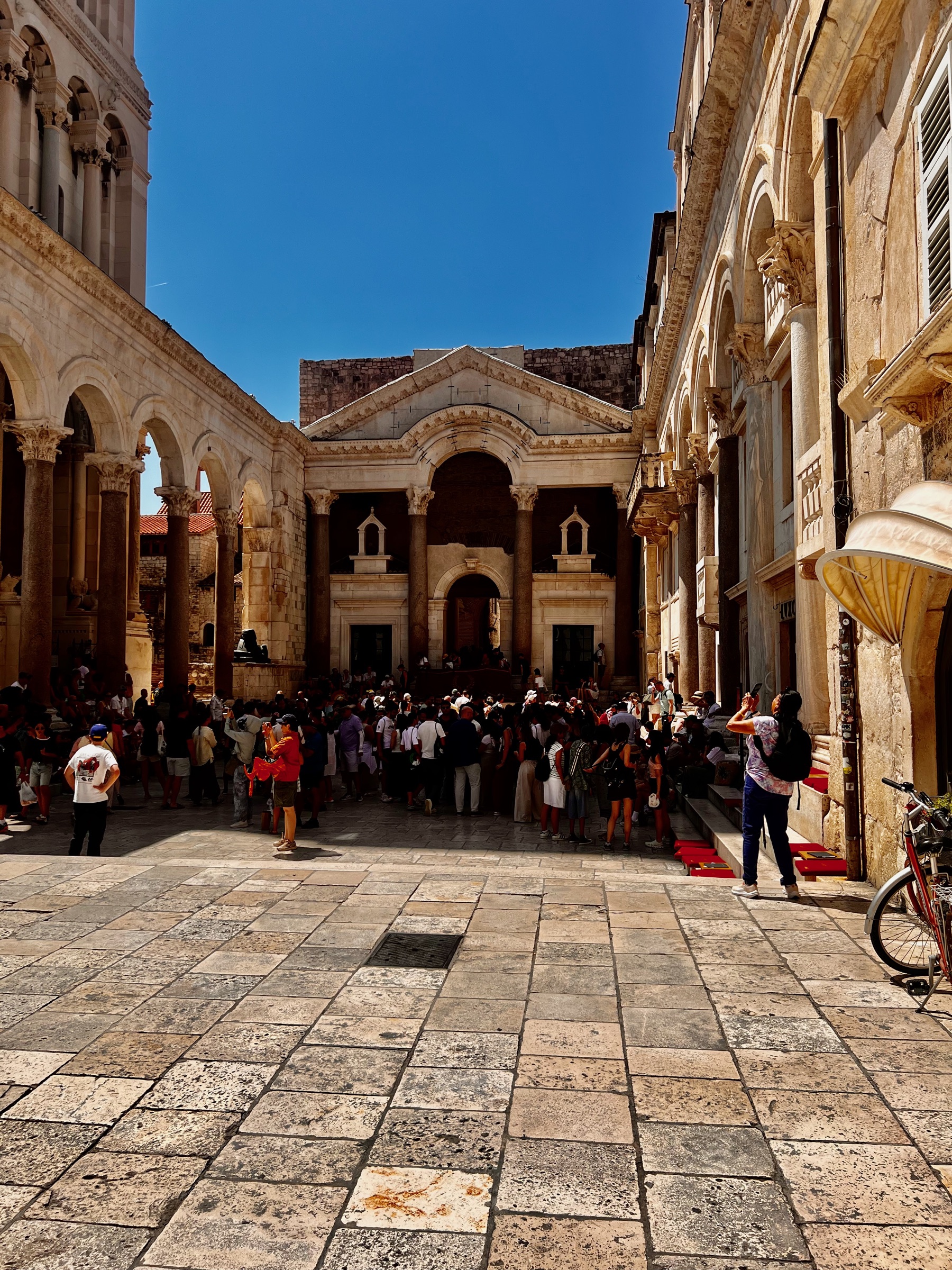
Diocletian's Palace did not feel like a ruin with a city built around it. The palace had become the city. Roman columns framed a crowded Peristyle, ancient walls supported later buildings, and every passage seemed to connect one century with another.
The most remarkable details were often the ordinary ones: shuttered windows set into massive stone blocks, balconies above Roman masonry, and homes still occupying spaces shaped nearly two thousand years ago. History here was not preserved behind glass; it continued to be used.
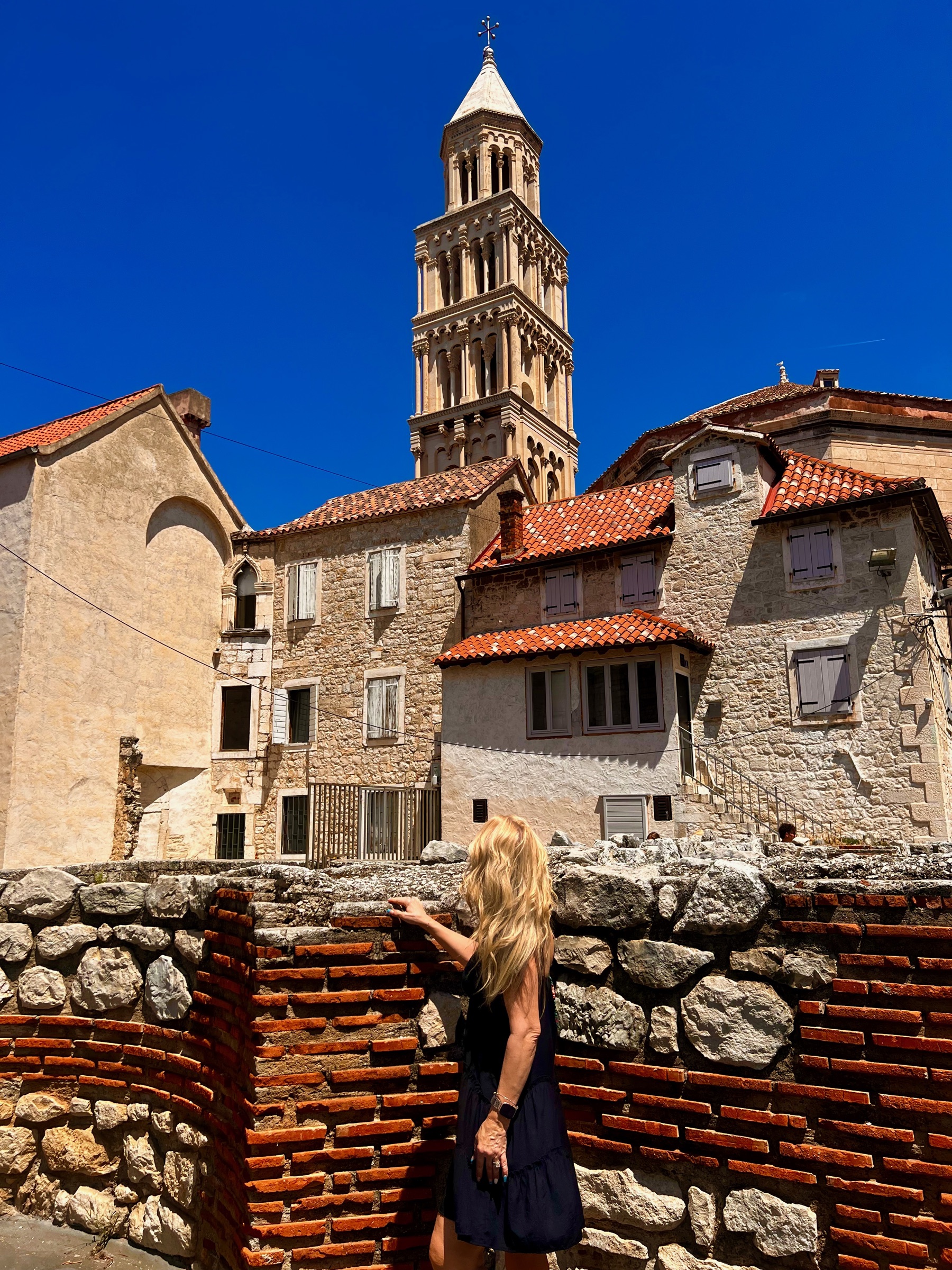
The Cathedral of Saint Domnius carried another of Split's extraordinary transformations. What began as Emperor Diocletian's mausoleum eventually became a Christian cathedral, while its tall bell tower grew into the defining landmark of the old city.
Seen above the layered palace walls, the tower made the city's long history feel almost tangible. Roman foundations, medieval additions, and present-day life occupied the same view, each era adapting what the previous one had left behind.
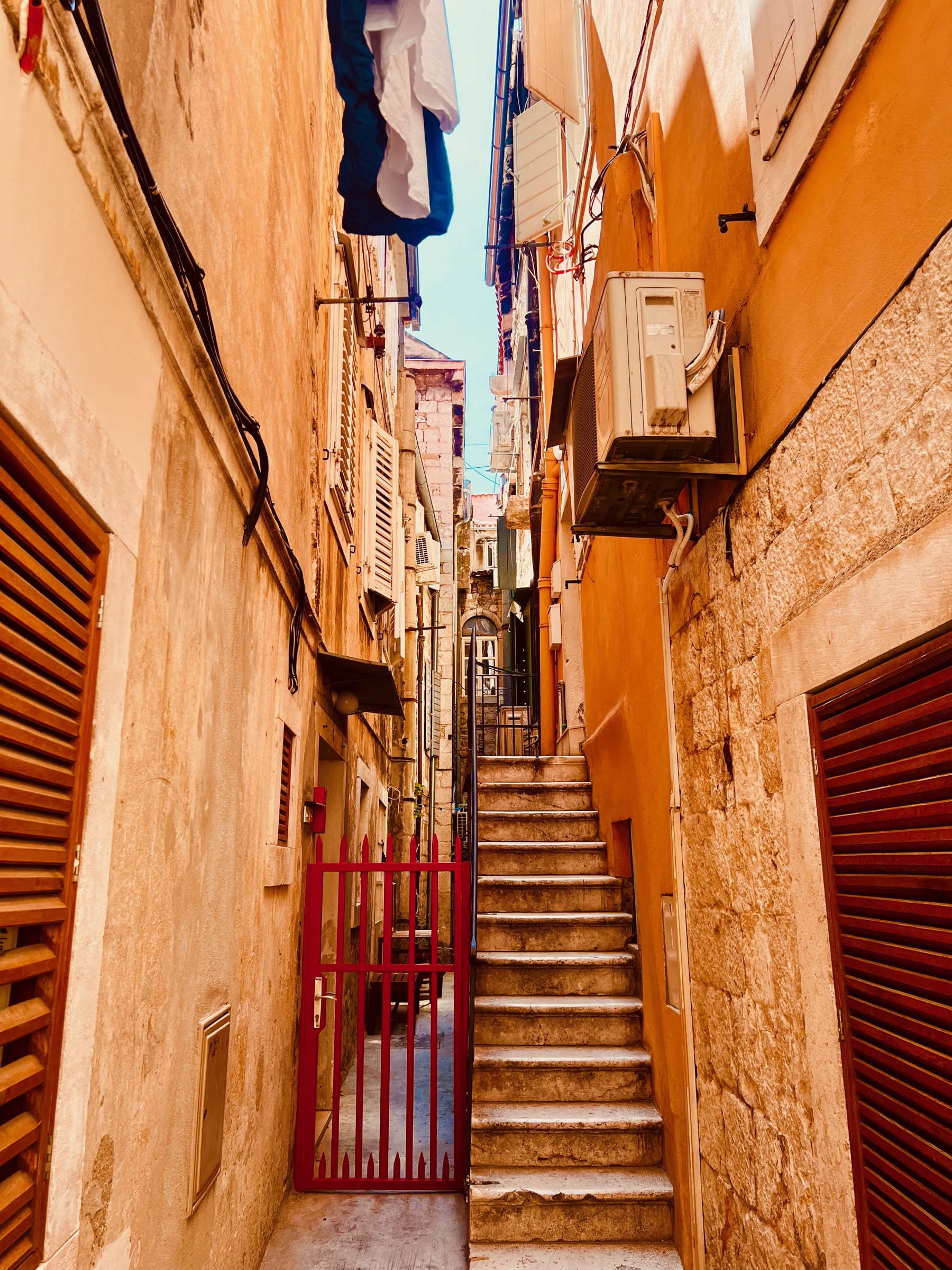
Beyond the grand palace spaces, Split became intimate. We followed polished lanes into quiet courtyards, passed green shutters and sun-warmed stone, and looked up through narrow passages where plants and laundry softened the ancient walls.
Those smaller streets revealed the character we remembered most clearly. The palace was monumental, but it was also colorful, imperfect, and deeply human—a place where wandering without a route felt like the best way to understand it.
Plan your visit
A few useful details to help you understand the place, appreciate its highlights, and plan your own visit.
At a glance
What to notice
One of the world's most remarkable Roman structures still serving as the heart of a modern city.
Split's waterfront is lined with cafés, palm trees, and beautiful Adriatic views.
Originally built as Emperor Diocletian's mausoleum, it later became one of the world's oldest cathedrals.
Stone alleys, hidden courtyards, and centuries of history make every walk feel like an exploration.
From experience
The historic center is compact and rewards slow exploration.
The Riva offers a relaxing place to enjoy the city's atmosphere.
Many of Split's architectural details are easy to miss unless you slow down and look around.
Some of the city's most memorable discoveries happen away from the busiest streets.
Through our lens
Find your way
You're exploring Split. Adventures Companion will eventually help you save destinations, build personalized itineraries, organize reservations, and preserve the memories you create along the way.
Continue the journey
Discover additional history, visitor information and carefully selected resources related to Split.
Additional resources for this destination are coming soon.